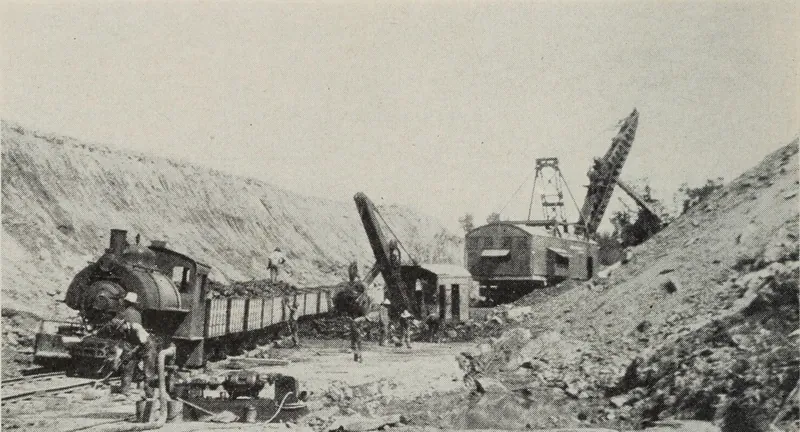
The coal pages of the 1879 History of Fulton County, Illinois read like a geologist's field notebook. The book leans on Prof. Worthen, who first visited the county in 1859 and found seven coal seams stacked in its bluffs. Along the way it names the farms where coal was dug, the coal-oil works at Avon, the mines northwest of Cuba and a Scottish miner turned coal shipper at Astoria. Here is what it says, seam by seam and town by town.
Written from History of Fulton County, Illinois (1879). Everything below comes from that book, and where it gives an opinion, we say so. You can read the full book free on the Internet Archive.
Seven Seams in the Bluffs
The 1879 history says nearly all of the county's uplands are underlaid by coal. It quotes Prof. Worthen, who said he had found in Fulton the most complete exposure of the productive Coal Measures he had met with anywhere in Illinois. For that reason he treated the Fulton section as the typical one and used it to match up the coal beds across the central and western part of the state.
Worthen counted seven seams, numbered from the bottom up, all visible at their natural outcrops. Every one except the top seam had been worked to some extent. Together they held about 25 feet of coal, with single seams running from twenty inches to six feet thick. Because the rock layers dip to the east, the three lowest seams show along the bluffs of Spoon river in the south and west of the county and pass below the level of the Illinois river before they reach the eastern border. The upper seams lie under nearly all of the central and eastern townships.
For a family historian that geography explains the map. The book's lower-seam workings cluster along Spoon river and its small creeks, where the coal shows in the bluffs, while the upper seams were worked in the uplands around Astoria, Canton, Cuba, Farmington and Fairview.
The Lower Seams: Seville, Vermont, Lewistown and Bernadotte
Seam No. 1 was thick enough to pay at only one place in the county, near Seville, where it was worked at two spots, one above the railroad bridge and one below. The coal there averaged about three feet.
No. 2, usually two to three feet thick, was one of the most regular seams in the series and could be found everywhere in the Spoon river bluffs. Its roof was almost always a blue clay shale that had to be thoroughly cribbed in tunnels to keep it from falling. In the south of the county it outcropped on Otter creek about a mile and a half west of Vermont, and the book says it had been worked there since the earliest settlement of the county. In the same valley Moses Matthewson bored for oil to a depth of about 800 feet, but no record was kept of the rock the boring passed through.
Around Lewistown, No. 2 was worked at many points in the Spoon river bluffs south of town and on the small creeks nearby, and about half a mile west of the city. Half a mile east of Lewistown a shaft 40 feet deep had been sunk on the land of a Mr. Hunter. On his 1859 visit Worthen found a mine two and a half miles southeast of Lewistown on the land of Wm. Winterbottom, and another a mile nearer town opened by a Mr. Butler. Near Bernadotte the seam sat about 80 feet above the river, and a Mr. Parks mined it a mile and a half southwest of the village in 1859.
Worthen rated No. 2 as coal of excellent quality, freer from the bi-sulphuret of iron than the average Illinois coal, a seam that cokes well and carries more than an average share of fixed carbon. No. 3, lying 40 to 60 feet above No. 2, had been mined but little.
“Ten retorts were then in operation at this locality, and the product was said to be 30 gallons from a ton of coal.”
Avon's Cannel Coal and the Coal-Oil Retorts
Near Avon a thin seam of cannel coal, only about 14 to 20 inches thick, lay at about the same level as No. 1. In 1859 it was worked extensively for the distillation of coal oil. Ten retorts were running there, and the yield was said to be 30 gallons from a ton of coal. Shortly afterward the oil wells of Pennsylvania were developed, and the book says that put a stop to making oil from cannel coal in Illinois. The Avon mines were abandoned.
Under the Avon cannel coal lay fire-clay. The geology chapter puts it at about five feet of excellent fire-clay in one passage and three to five feet in another. Fire-clay two to three feet thick also lay below the coal at Andrews' coal bank, two and a half miles north of Marietta. Iron ore came with the coal measures too: a bed of limonite eight to twelve inches thick near Seville, the same band of ore near Avon, and impure carbonate of iron near Utica. The 1879 writers thought the county's ores might become valuable for making iron at some future time.
No. 4 and No. 5: Astoria, St. David, Canton, Breed's Station and Cuba
Worthen considered No. 4 the most valuable of all the coals outcropping in the county, because of its wide extent and the average quality of its coal. It was found at every locality the State Geologist examined. South of Spoon river it underlay the highlands around Astoria, where it was opened as early as 1859 and ran four and a half to five feet thick under about two feet of black shale that made a good roof. The book says No. 4 was very extensively worked near Astoria and at St. David and Canton. At Breed's Station a tunnel had been opened in it, and the coal there averaged about five feet. It was also worked near Cuba and at several points northwest of Fairview on the breaks of Coal creek.
Seam No. 5 was local. It was not worked to any extent except around Cuba, where it ranged from four to five feet thick.
The one coal man the excerpt profiles at length is John Skinner of Astoria, listed as a coal operator. Born in Scotland in 1844, he first set foot in New York in March 1865, went to Pennsylvania and began life as a miner, then moved on to Cleveland, Illinois. In 1870 he came to Astoria, where, the book says, he saw that coal of a superior quality existed in abundance. With W. H. Emerson he soon became a coal shipper. In 1876 he married Mrs. Sarah E. Rosia, widow of John B. Rosia. His road from Scotland through the Pennsylvania mines to western Illinois is the kind of migration a researcher can follow step by step in later records.
“John Skinner, coal operator, is a native of Scotland, where he was born in 1844…”
Cuba's Mines and the Horse-Drawn Track
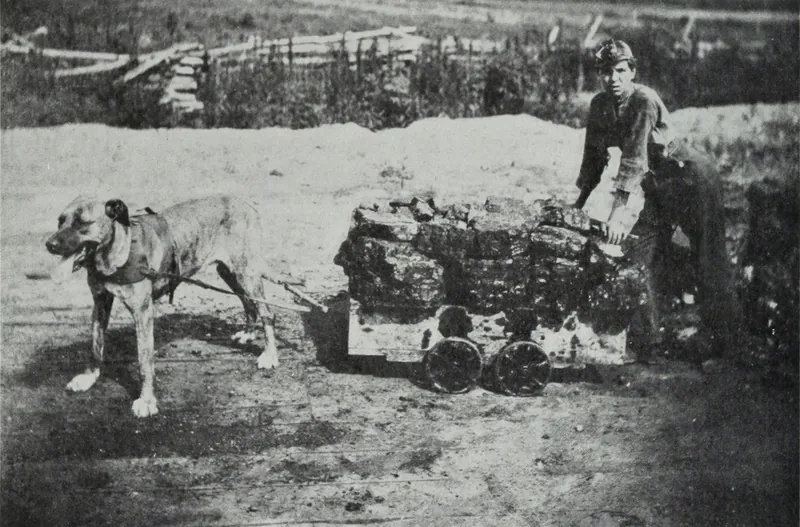
The 1879 history calls Cuba one of the leading places in the county at which coal is mined. Large quantities of coal were shipped from the town, and the mines northwest of the village were described as quite extensive. A small railway track was laid from the mines to the depot of the Toledo, Peoria & Warsaw Railway, a distance of over a mile, and horses hauled the coal to the depot in small cars.
Cuba grew out of two rival plats on the same quarter section. Ephraim Brown laid out a little town there in 1834 and called it Middletown. On Nov. 16, 1836, Joel Solomon, D. W. Vittum, Samuel Brooks and T. B. Coggswell platted another town on the same section and named it Centerville. In the book's words, two towns on one quarter section was too much, so they were consolidated and named Cuba. The town sat about an equal distance from Canton and Lewistown on the T., P. & W. line, and in the fall of 1879 grading was under way on the Fulton County Narrow-Gauge Railway, which ran from Fairview to Havana through Cuba.
No. 6 Around Canton, Farmington, Norris and Fairview
Seam No. 6 was the highest coal worked to any extent in the county. It ran four to five feet thick and gave an excellent coking coal, and also a better smiths' coal than the lower seams usually supplied. On his 1859 visit Worthen found it opened at Piper's place, two miles north of Canton, and at Barton's place, two and a half miles north of Farmington. A Mr. Burbridge was working it at the same time about three miles west of Farmington on Little creek, and more recently a Mr. Johnson had opened it on land adjoining Piper's.
Six miles northeast of Canton, on a branch of Copperas creek, No. 6 was worked by tunnelling. It was worked at Powell's, near Norris, and mined two miles northeast of Fairview. Burbridge & Co. had a shaft one mile west of Farmington that reached No. 6. Worthen thought the seam probably underlay three or four townships north and east of Canton, reachable anywhere in that region at depths of 25 to 100 feet. The topmost seam, No. 7, was so thin that no one had tried to mine it in competition with the thicker beds.
Coal shaped trade routes as well as towns. The Canton & Liverpool Plank Road, started in 1850, ran 13 miles from the Public Square in Canton to Liverpool. Men who kept warehouses at Copperas Creek Landing threw up a free dike across the bottom for about 2 miles, and the landing was only 10 miles from Canton. The book says that because it was nearer to Canton and reached a good coal district, farmers preferred Copperas Creek Landing to Liverpool, which hurt the plank road. The plank road ran for about six years.
What the 1879 Book Counts, and What It Leaves Out
The 1879 authors were plainly boosters about coal. They called the county's beds almost inexhaustible and reckoned that two upper seams alone held 9,000,000 tons to the square mile under the central and northeastern townships, or 2,268,000,000 tons under seven townships. Coal mining, they wrote, was yet in its infancy in what they called a most highly favored region.
Outside money was part of the picture. William C. Goudy, who was admitted to the Bar while living at Lewistown and later moved to Chicago, was still, the book says, largely identified with the business interests of the county, especially coal mining.
The pages used here say little about ordinary miners. They give no wages, strikes, accidents or mine payrolls, and no miners' birthplaces beyond John Skinner's Scotland. What they do give is names tied to land: Hunter, Winterbottom, Butler and Parks near Lewistown and Bernadotte; Piper, Johnson, Barton, Burbridge and Powell around Canton, Farmington and Norris; Andrews near Marietta. Several openings are described as being on a named man's land, so township land records are a natural next stop for anyone whose family name appears on that list.
Finding your ancestor in Fulton County
- Census records (free through 1950) list each person's occupation and town, so a mining family shows up decade by decade.
- Death records: search our Illinois database by surname.
- The county histories themselves: the biographical sections of History of Fulton County, Illinois hold hundreds of family sketches.
- Newspapers on the Library of Congress's Chronicling America carried obituaries, accidents, and local news.
Tell us one grandparent's name. We'll take a free first look at the records and email you back.
Ask about my family →Frequently asked questions
How many coal seams did the 1879 history describe in Fulton County?
Seven. The book, quoting Prof. Worthen, numbers them from the bottom up and says all except the top one had been worked to some extent. Together they held about 25 feet of coal, with individual seams from twenty inches to six feet thick.
Was coal oil ever made from Fulton County coal?
Yes. A thin seam of cannel coal near Avon was worked extensively in 1859 to distill coal oil. Ten retorts were in operation and the yield was said to be 30 gallons per ton. The development of Pennsylvania's oil wells soon ended the business and the mines were abandoned.
How did coal get from the Cuba mines to the railroad?
According to the 1879 history, a small railway track ran over a mile from the mines northwest of Cuba to the depot of the Toledo, Peoria & Warsaw Railway, and horses hauled the coal in small cars.
Which coal seam did the book consider the most valuable?
No. 4. Prof. Worthen called it the most valuable coal outcropping in the county for its wide extent and average quality. It was very extensively worked near Astoria and at St. David and Canton, and also near Cuba, at Breed's Station and northwest of Fairview.
Photographs on this page are in the public domain. About the images and their sources.