In the passages of the 1881 History of Sangamon County, Illinois used for this page, coal mining turns up inside biographical sketches rather than in a chapter of its own. Read together, those sketches name an operator who ran shafts at Riverton, Dawson and Springfield Junction, the bankers and politicians who owned coal companies, a top-man at a Springfield coal shaft, and the dealers who sold the coal. Each one leaves a family trail worth following.
Written from History of Sangamon County, Illinois (1881). Everything below comes from that book, and where it gives an opinion, we say so. You can read the full book free on the Internet Archive.
Riverton: the Howlett shaft and the Western Coal and Mining Company
The fullest account of a working mine comes from the sketch of Fred Wilms, president and general manager of the Wabash Coal Company. Wilms got his start in Sangamon County coal with the Western Coal and Mining Company, a corporation with an authorized capital stock of $500,000, where he served first as cashier and later as manager. The company worked mines at Riverton, in Sangamon County, and at Danville, in Vermilion County.
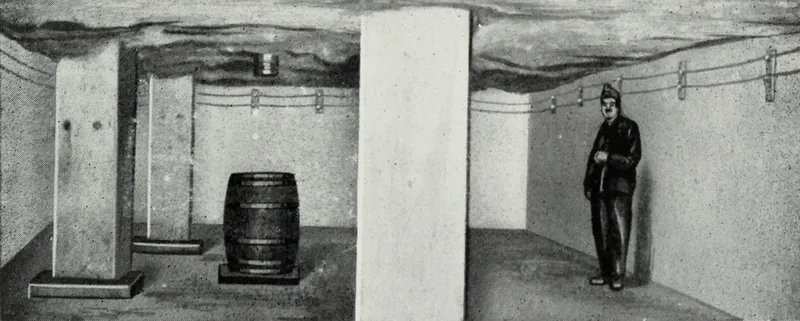
At Riverton the company did not sink a new shaft. It re-equipped an old one that P. L. Howlett had sunk some years before (the scanned page prints the name as "Ilowlett") and took a ten years' lease on the mine. The 1881 history says a force of 150 men there mined a million bushels of coal a year. The lease did not run its full term: the book says the company closed out in 1877.
Riverton shows up in other sketches, which helps place the village in the working lives of ordinary people. Madison Veal, born in Wilkinson County, Mississippi, on March 9, 1844, served in Company H of the Twenty-ninth Illinois Infantry and, after his discharge at Camp Butler, worked one winter and spring at the Howlett Distillery at Riverton. William Fry, a Springfield mill engineer born in Sangamon County in 1846, spent four months as chief engineer at the Riverton Paper Mills. Louis A. Jones, born in Barren County, Kentucky, in 1852, worked a year in a nursery at Riverton. The book does not say whether the Howlett of the distillery and the Howlett of the shaft were the same man.
The Wabash Coal Company at Dawson and Springfield Junction
The Wabash Coal Company was organized in March 1880, with Fred Wilms as president and general manager and William Wilms as secretary and treasurer. The book does not say how the two men were related. In the spring and summer of 1880 the company sank a shaft at Dawson, twelve miles east of Springfield on the line of the Wabash, St. Louis & Pacific Railway. At a depth of 250 feet it reached a five-foot vein of coal that the 1881 history calls "of very fine quality." The Dawson shaft worked 100 miners, who took out 100,000 bushels of coal a month.
The company also ran what the book calls "the old junction mine" at Springfield Junction, two miles south of the city, which Wilms had leased. It was the bigger of the two: 150 men worked there, and it yielded an average of 175,000 bushels a month. Between Dawson and the Junction mine, the Wilms company employed about 250 men at the time the book was written.
“…a force of one hundred and fifty men, who mined a million bushels of coal per year.”
Owners and investors: the Barclay and Starne companies
Two of Springfield's leading businessmen ran the Barclay Coal Company. Colonel John Williams was its president, and George N. Black was secretary and treasurer of the Barclay Coal Mining Company (the book uses both names) from its organization in 1873. The two were family. Black, born March 15, 1833, in Berkshire County, Massachusetts, came to Springfield in October 1850 and went to work as a clerk in Colonel Williams's dry goods store for $15 a month. Six years later Williams made him a partner, and Black later married Louisa, the colonel's eldest child. Williams, who in 1840 married Lydia Porter, a native of Livingston County, New York, was also a director of the Springfield Iron Company, in which Black held stock. The sketches give no location or output for the Barclay mine.
A second family firm belonged to Mr. Starne, a former Illinois Secretary of State and State Treasurer who was chosen senator from Sangamon County in 1872. Out of public life, the book says, he owned the West End Coal Mines, where his sons Maurice and Charles were associated with him under the firm name of Starne & Sons. Another sketch names a "Starne, Dresser & Company" coal shaft in Springfield. The book does not say whether that shaft was part of the West End mines.
A man at the shaft: Monroe T. Oglesby, top-man
The only mine worker in these pages who gets a sketch of his own appears in the book's section on the Black residents of Springfield. The 1881 history says Black men and women were rare in early Springfield and arrived in large numbers only during and after the Civil War, and that most of the people it profiles had lived through slavery before coming to the city.
Monroe T. Oglesby was born near Charleston, South Carolina, in October 1843. At five he came with his mother to Carlyle, in Clinton County, Illinois. His working life reads like a tour of service jobs: cook at the Chenery and St. Nicholas hotels, barber under Thomas Killion, Pullman porter between Springfield and Lafayette, Indiana, on the Wabash, St. Louis & Pacific, janitor during sessions of the General Assembly, and porter and messenger for Governors Beveridge and Cullom. After another stretch as a Pullman porter out of Chicago and a year barbering, he became top-man at Starne, Dresser & Company's coal shaft in Springfield, a job he still held when the book was written.
For family researchers the sketch is generous. His parents, William W. and Nancy Oglesby, were both born in South Carolina and belonged to the Baptist Church. He married Sarah Fry, who was born in Sangamon County, a daughter of Henry Fry, and they had two children, James W. and Annie L. Oglesby. William Fry's sketch also names a Kentucky-born father called Henry Fry, but it gives a different mother, and the book does not connect the two families.
“This shaft works one hundred miners, who take out one hundred thousand bushels of coal per month.”
Selling the coal: railroads, retail yards and ice-and-coal men
Sangamon County coal moved by rail. The Wabash Coal Company sold its output chiefly at points along the Wabash, St. Louis & Pacific, as far east as Toledo and as far west as Quincy and Hannibal. It kept two retail yards, one in Springfield and one in Jacksonville, and did a large wholesale and retail business in hard coals as well. The book's section on Springfield as a manufacturing point argues that the locomotive and the railroad had ended the old disadvantage of interior towns, and its railroad section hopes for competition in freight rates for the manufacturers then gathering in the city.
Coal was also a seasonal trade for Springfield's ice men. C. E. Bradish, born in 1850 in Camden, Oneida County, New York, who came to Springfield on May 1, 1869, is described as a wholesale and retail ice dealer and a retailer of anthracite and Illinois coal and wood. His firm of Bradish & McCullough supplied much of the city with ice in summer and coal in winter.
Wilms himself was president of the Springfield Coal Association for three years, the only coal trade body these sketches name. The book does not describe what the association did.
Tracing Sangamon County coal families in the 1881 history
The Wilms sketch carries the most family detail. Fred Wilms was born in Quincy, Illinois, in 1842, clerked in a dry goods store there from fourteen to twenty, and spent six years as bookkeeper and buyer for a boot and shoe house before running his own. He moved to Springfield in the 1870s and turned to coal mining. In January 1867 he married Anna Dickhut of Quincy, whom the book calls the daughter of a pioneer of that place. They had two children, Carrie, aged twelve, and Fred, aged six, when the sketch was written. He was a Mason who had risen to Knight Templar, so lodge records are another place to look.
Two cautions. First, not every "miner" in these sketches dug coal. Temp Elliott went to California and stayed in the mines before returning to Springfield to open a grocery, and John Schoeneman, later proprietor of the Western Hotel, mined in the Montana gold mines for three years. Second, the scan of this book is rough. Names such as Howlett come through garbled, and many years in the coal sketches are misprinted in the scanned text, which is why some dates are left out here. Check the printed page before entering a date in a tree.
The passages used for this page say nothing about coal at Pawnee, Auburn, Divernon, Williamsville, Sherman or Grandview. Auburn appears only as the place where Madison Veal worked on a farm for J. H. Murphy, and Pawnee only in an unrelated criminal case.
Finding your ancestor in Sangamon County
- Census records (free through 1950) list each person's occupation and town, so a mining family shows up decade by decade.
- Death records: search our Illinois database by surname.
- The county histories themselves: the biographical sections of History of Sangamon County, Illinois hold hundreds of family sketches.
- Newspapers on the Library of Congress's Chronicling America carried obituaries, accidents, and local news.
Tell us one grandparent's name. We'll take a free first look at the records and email you back.
Ask about my family →Frequently asked questions
Who ran the coal mine at Riverton, Illinois, in the 1870s?
According to the 1881 History of Sangamon County, the Western Coal and Mining Company re-equipped an old shaft sunk by P. L. Howlett and worked it under a ten years' lease, with Fred Wilms as cashier and later manager. About 150 men mined a million bushels a year there before the company closed out in 1877.
Where was the Wabash Coal Company's Dawson shaft?
The 1881 history places it at Dawson, twelve miles east of Springfield on the Wabash, St. Louis & Pacific Railway. It was sunk in the spring and summer of 1880 and reached a five-foot vein at 250 feet. One hundred miners took out about 100,000 bushels of coal a month.
What coal companies does the 1881 Sangamon County history name?
The sketches name the Western Coal and Mining Company at Riverton, the Wabash Coal Company at Dawson and Springfield Junction, the Barclay Coal Company of Colonel John Williams and George N. Black, the West End Coal Mines of Starne & Sons, and a Starne, Dresser & Company shaft in Springfield.
Does the book name any individual coal miners?
Few. Mine workers appear mostly as head counts, such as the 150 men at Riverton. The exception is Monroe T. Oglesby, born near Charleston, South Carolina, in 1843, who was top-man at Starne, Dresser & Company's Springfield shaft. His sketch names his parents, his wife Sarah Fry and their two children.
Photographs on this page are in the public domain. About the images and their sources.